By Victor Shapinov, Union Borotba (Struggle)
April 2, 2015: There is a Latin proverb which says: “Ad impossibilia nemo tenetur” — “No one is obliged to do impossible things.” It looks like the Kiev authorities are not familiar with this ancient wisdom. Or, conversely, too familiar. Turning the meaning of the Minsk-2 Agreement on its head, the Kiev side is trying to “force the impossible” upon the rebels in the Donbass, confronting them with the alternative: either complete surrender on Kiev’s terms, or continuation of the fratricidal war.
This is the tug of war over implementation of the Minsk-2 agreements.
Yesterday the leadership of the Donetsk People’s Republic (DNR) demanded that their representatives finally be included in the discussion of constitutional reform. “All matters relating to elections and constitutional reform, according to the terms of the agreement, must without fail include us. As prescribed by the terms of the agreement, representatives of the DNR and LC will necessarily participate in the decision-making in the tripartite contact group,” DNR envoy Dennis Pushilin told Interfax.
Kiev’s position on negotiations has led to the virtual collapse of the agreement. And it’s not even about the 800 ceasefire violations by the Ukrainian Armed Forces (APU) recorded in the Donbass region. After another necessary breathing spell following their military defeat, Kiev is seeking to prevent the move to political dialogue by imposing unacceptable and inappropriate conditions on the Minsk Agreement.
One such condition, of course, is holding local elections in the “special territories” under the existing laws of Ukraine. This formulation, in particular, means that the composition of election commissions will be formed in Kiev, in large part by representatives of the parliamentary parties in the Verkhovna Rada. Can you imagine what supporters of Lyashko and Yatsenyuk will tally in the “special territories”?
But this is a trifle. Because it’s not just about how to better push the People’s Republics into the legal minefield of Ukraine. Perhaps this is what Kiev strategists saw as the outcome of the Minsk Agreement, but it’s not what was agreed to.
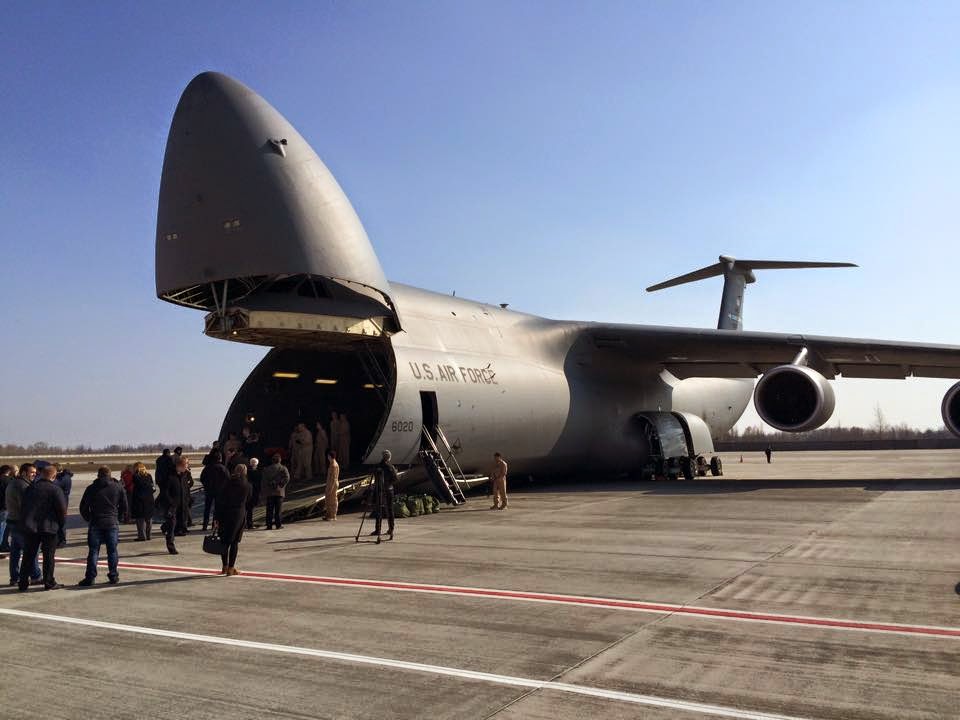
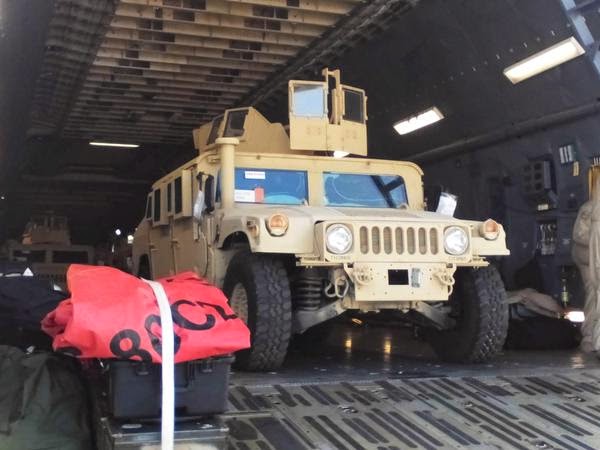 |
| U.S. military Humvees delivered to the Ukrainian junta, March 2015. Photos: Colonel Cassad |
And the Kiev junta disrupts the agreements precisely because it is afraid of this half of the population that has not accepted the Maidan and its results. After all, if you give “voice” to representatives of the victorious uprisings in the Donbass, then their “voice” would require the participation of those involved in the suppressed uprisings in Odessa and Kharkov. And something tells me that the “silent majority,” suffering from rising prices and tariffs, would not be on the side of the Kiev authorities in this dialogue.
There is another important factor in the failure of the agreement. This is the position of the United States. As we have seen in the conflict between Kolomoisky and Poroshenko, the United States decides internal conflicts of the Ukrainian authorities. The USSR rightly called such relations “puppet regimes.” And the U.S. administration is hardly interested in resolving the civil war at the moment, especially given the strong pressure on Obama from Republican (and not only Republican) “hawks” on the issue of Ukraine.
In general, you always want to be an optimist when it comes to war and peace, but it seems that war is inherent in the social nature of Ukrainian regime, and lasting peace will be established only when a new leadership take power in Kiev.
Translated by Greg Butterfield

 Red Star News + Translations