By Greg Butterfield
One year after 48 anti-fascist activists died by bullets, flames and beating at the hands of Ukrainian neo-Nazi gangs, Odessa is a city living under occupation.
Yet the fighting spirit of this multinational port city – the very antithesis of the white-supremacist, neoliberal-fascist regime installed by Washington last year – refuses to be snuffed out.
Whether protesting the bogus trial of 20 anti-fascist activists, now detained for nearly a year, tortured, and caged during every hearing; or organizing among Ukraine’s besieged minority nationalities; or holding monthly commemorations of the May 2 martyrs despite violent attacks — Odessans continue to resist in ways large and small.
From April 27 to May 2, dozens of commemorations will be held in cities and towns from the Donbass to Russia, across Europe and around the world, to mark the first anniversary of the Odessa massacre.
And people in Odessa plan to mark the anniversary on the square near the House of Trade Unions, despite threats from fascist groups. Other residents will commemorate the victims by placing lit candles in their windows at sundown.
Odessa has become an international rallying cry against the brutality of Kiev and its U.S.-NATO backers, and their war against the independent Donetsk and Lugansk People’s Republics.
Those who fell fighting the fascists in Odessa – like communist youths Andrei Brazhevsky of Borotba (Struggle) and Vadim Papura of Komsomol – have become symbols of this modern anti-fascist struggle.
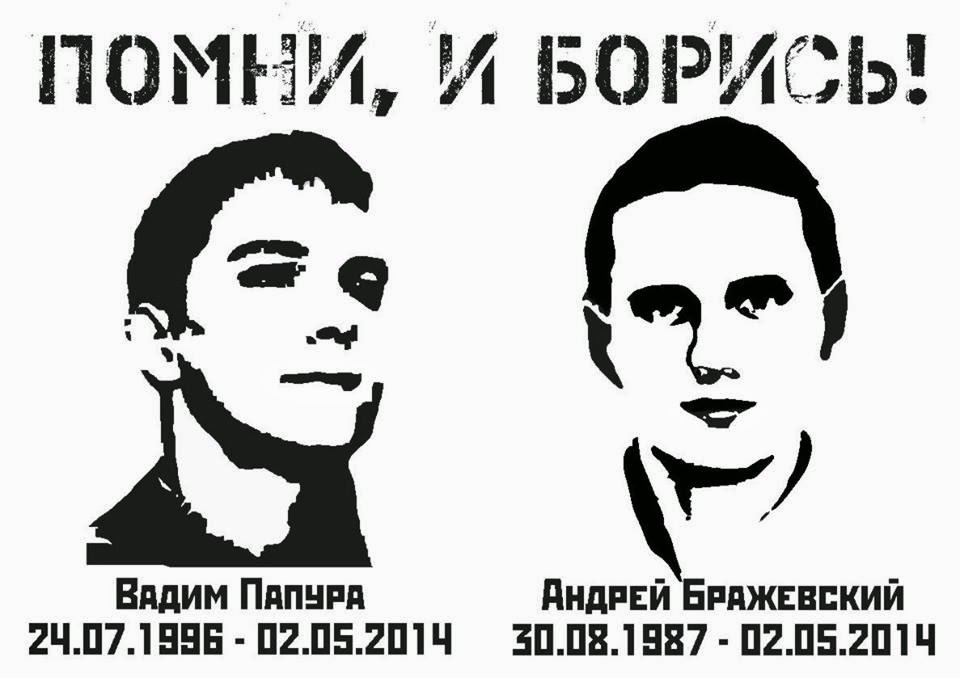 |
| Vadim Papura and Andrei Brazhevsky |
After several weeks of mass protests by Odessa residents against the coup in Kiev, in late April the city was flooded with neo-Nazi gangs and paramilitary groups from Western Ukraine.
Despite this, a several-thousand-strong May Day march was held, led by activists from the Kulikovo Field protest encampment.
The following day, the fascists struck back. Under the guise of a “Ukrainian Unity” parade for fans of the local soccer team, the neo-Nazis launched a violent attack on passersby in the Greek Street shopping district.
While anti-fascists mobilized to hold them back, they next targeted the Kulikovo encampment, burning it to the ground. Activists retreated to the nearby House of Trade Unions as the fascist bands began shooting and throwing Molotov cocktails.
The Nazis shot people through windows. They flooded the building with tear gas to force them outside. They set fires that gutted the hall and burned many bodies nearly beyond recognition.
Many who fled the building or jumped from upper floors were beaten to death on the ground with bats and chains. Some escaped with serious injuries.
In the end, many survivors were arrested, forced into exile or slandered by the media, while the murderers walked free.
Officially, 48 people died on May 2. But many activists believe the number was far higher.
An “official” investigation by the junta came to nothing, as the oligarchs, government officials and fascist leaders naturally refused to cooperate.
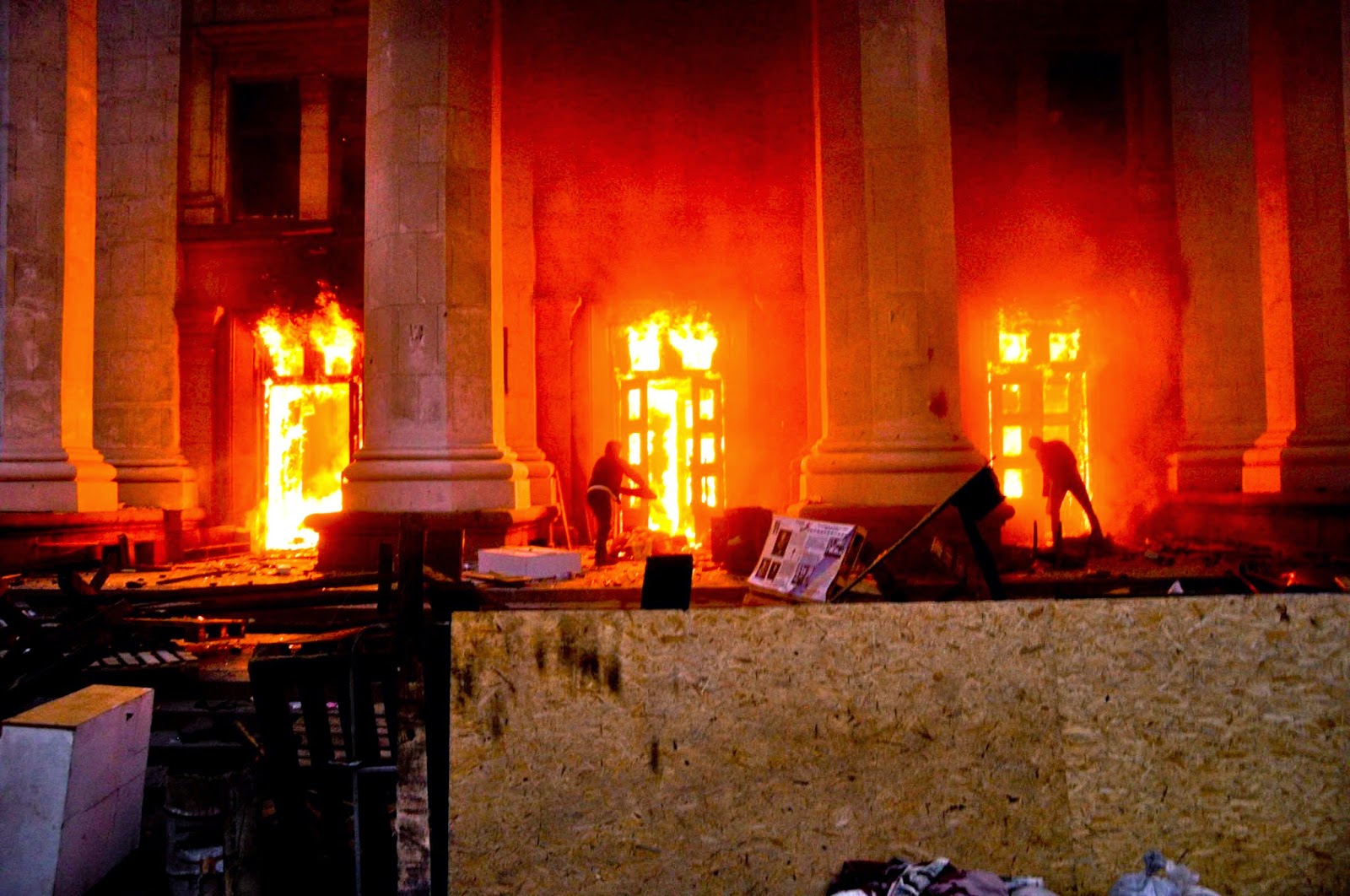 |
| Odessa House of Trade Unions ablaze on May 2, 2014. |
Today, any protest against the regime faces vicious repression by the police and fascist gangs that continue to occupy Odessa.
And today, mass arrests are becoming more common, showing the fundamental weakness of the regime – the people remain determined to resist.
Here are a few recent examples:
Representatives of the region’s many nationalities formed a public association called the Popular Rada of Bessarabia (PRB). More than 100 representatives of seven ethnic communities took part in the founding congress April 6, including Bulgarians, Gagauzians, Russians, Armenians, Romani, Moldovans and Poles.
The congress called for great autonomy for regional and ethnic groups, in response to the suppression of language and cultural rights by the U.S.-backed regime.
Shortly afterward, the Security Service of Ukraine (SBU) – the country’s equivalent to the FBI – detained 20 leading PRB members. (Dumskaya, April 8)
“Ukraine’s security services have unleashed real terror against our activists,” said a PRB statement. “Dmitry Zatuliveter, chair of the organization’s presidium, has disappeared and the attempts to contact him have proved futile so far.” (TASS, April 8)
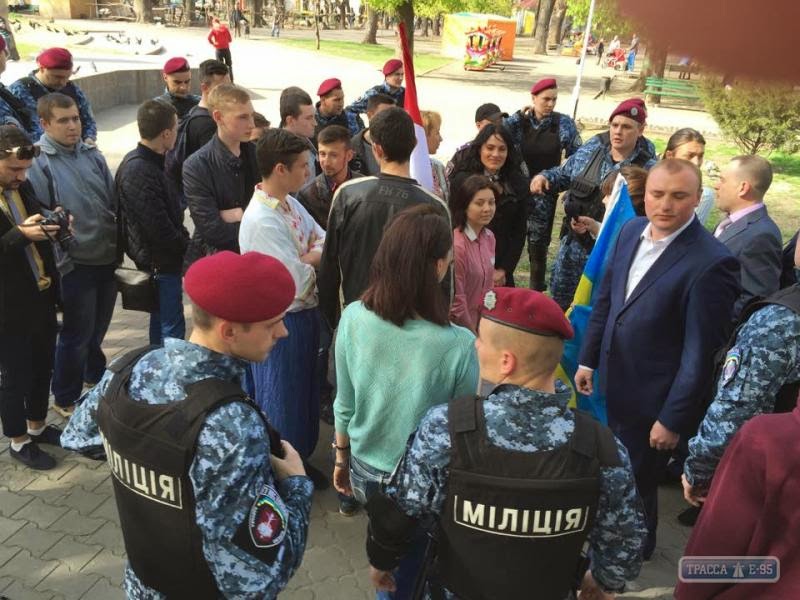 |
| Popular Rada of Bessarabia protests repression in Odessa, April 16. Photo: Timer |
Thirty PRB activists were detained during a protest April 16. A courageous team of PRB activists picketed the SBU office on April 22, demanding the release of the arrested activists, Timer reported. (Timer-Odessa.net)
Then on April 10 – as the Verkhovna Rada (parliament) in Kiev was busily passing laws outlawing communism and glorifying those who collaborated with Nazi occupiers during World War II – dozens of people waving red flags and wearing the banned orange-and-black St. George’s Ribbon confronted visiting oligarch President Peter Poroshenko and his far-right supporters.
“Before the arrival of Poroshenko, the SBU conducted mass arrests of people with different political views,” reported the Committee for the Liberation of Odessa, which is organizing an independent investigation of the May 2 massacre. “As a result, tens of people guilty of nothing were sent to Ukrainian prisons. Under threats and torture, many were forced to slander themselves and admit to actions they did not commit.” (2May.org, April 14)
On April 16, masked Right Sector fascists seized 50 people gathered outside Odessa City Hall for a protest against utility price hikes and other austerity measures, turning them over to the police. (Timer-Odessa.net)
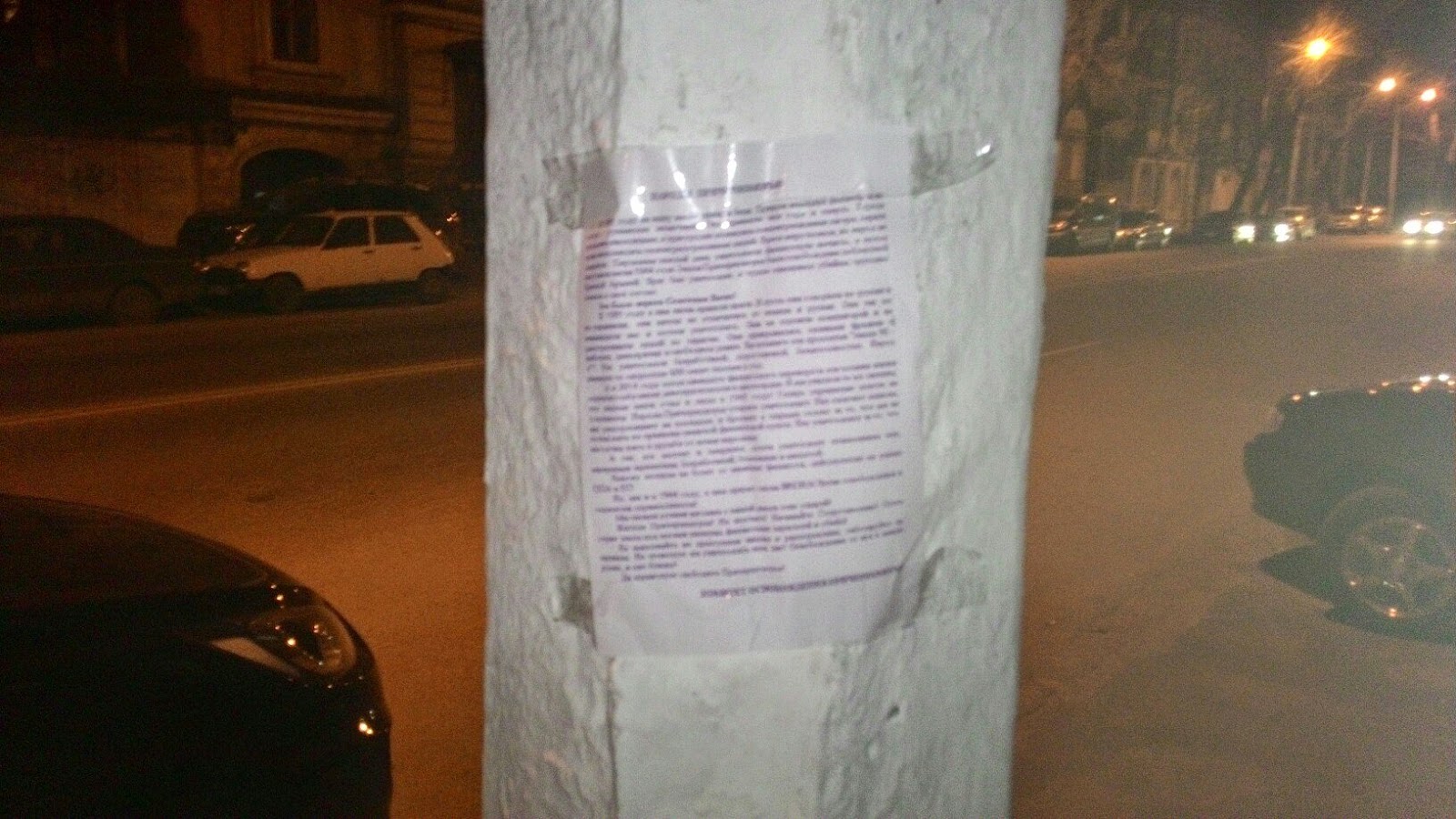 |
| Photo: 2May.org |
“There will be no mercy from the Kiev Nazis, acting on orders from the U.S. and EU! Residents of the Black Sea! Do not be silent! Start the resistance! Let it burn under the feet of the Nazi executioners!”
Vasily Vovk, head of the SBU investigative department, worried to the media that the May 2 could see “destabilization” in the fascist-occupied cities of southeastern Ukraine, or even the proclamation of a “People’s Republic of Odessa.” (Timer-Odessa.net, April 25)
Kiev and its imperialist backers should be worried, declared the Committee for the Liberation of Odessa.
“The anti-fascist movement will only become more radical, knowing that if the government will jail anyone for their political stance, for holding a red flag or reading a book by Lenin – then there is no reason to sit back and be silent.”

 Red Star News + Translations